
Imagine an advertising message that appears not by adding material, but by cleaning the ground. Since 2009, the clean tag has been revolutionising street marketing with a simple promise: communicate without polluting. This eco-friendly floor marking technique transforms urban dirt into an advertising medium, creating a visual contrast where other techniques would add paint or paper.
Embraced by major brands such as Adidas, Diesel and Spotify, as well as by local authorities for their awareness campaigns, the clean tag combines visual impact with an environmentally responsible approach. In 2026, as CSR criteria increasingly shape marketing decisions, this technique is attracting companies seeking to balance urban visibility with environmental respect.
This guide explains how the clean tag works, how long it remains visible, and why Com’Invader offers this technique as an innovative alternative to traditional street marketing.
What is a Clean Tag?
Definition and technical principle
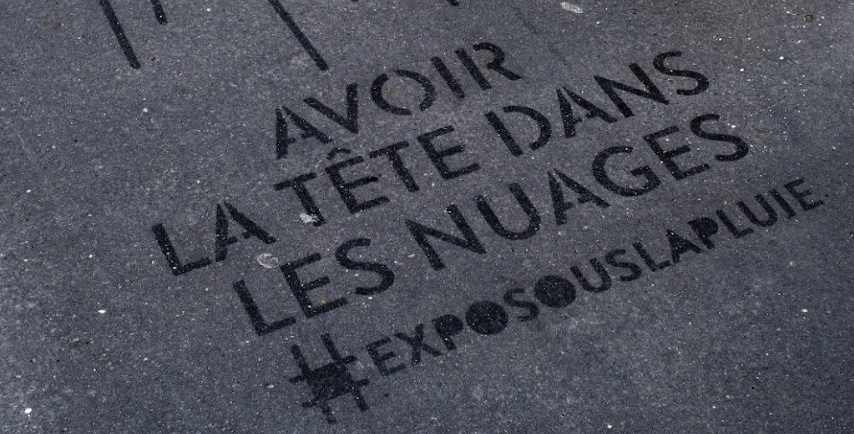
The clean tag, also known as reverse graffiti or water tag, is a marking process carried out by high-pressure cleaning that creates a visual contrast between cleaned and uncleaned areas. Unlike traditional techniques that add paint, stickers or posters, the clean tag reveals a message by removing accumulated dirt from the ground.
The process unfolds in three stages. First, a custom stencil is designed in aluminium or PVC depending on the desired durability and the number of planned uses. Aluminium stencils, being more robust, can withstand approximately 50 successive applications and are suited to multi-site campaigns. The stencil is then placed on the chosen surface: asphalt, concrete, urban pavement. Finally, a professional high-pressure washer (such as a Kärcher or equivalent) projects non-potable water through the stencil cut-outs.
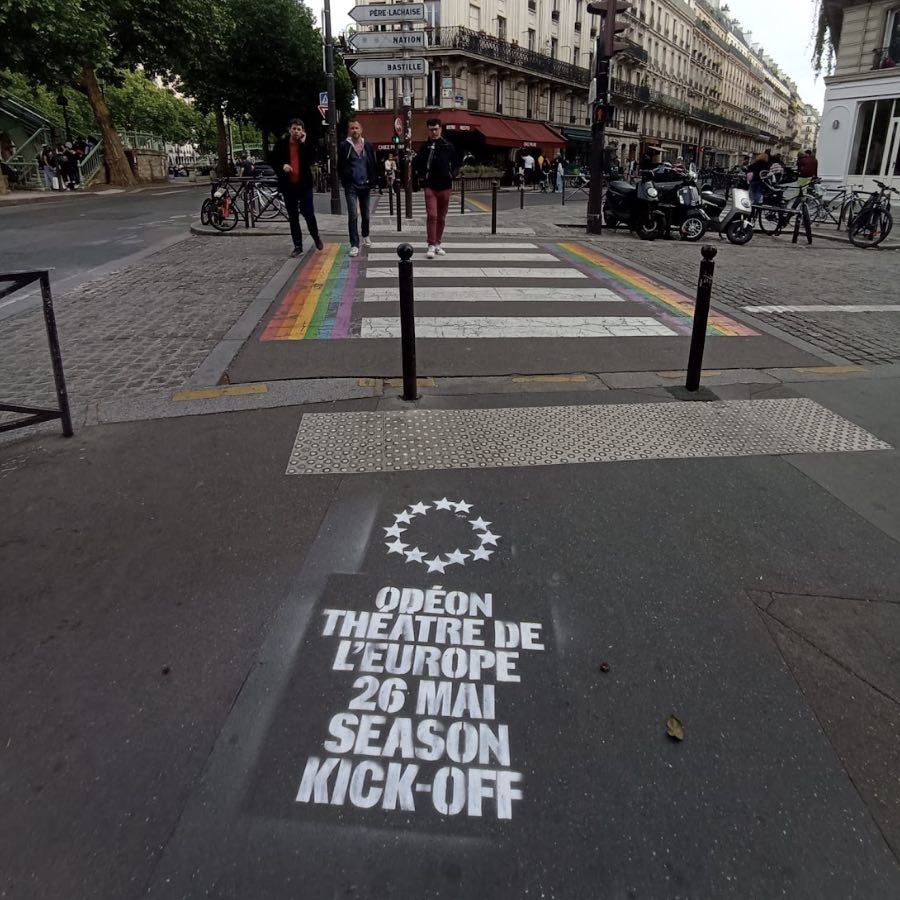
The result ? A message visible through a contrast of cleanliness: the cleaned areas appear lighter than the surrounding ground, creating the desired visual. This technique works particularly well on grimy urban pavements, pedestrian crossings, metro or train station platforms, and can even be applied vertically on certain walls with an accumulated layer of dirt.
Clean Tag vs Chalk Tag : what is the difference ?
Confusion between the clean tag and the chalk tag (or paint tag) is common, but the distinction is crucial from a technical standpoint. The clean tag uses only water to reveal a message by cleaning. It deposits no chemicals, no paint, no material on the ground. Its principle is based on the removal of dirt, not the addition of anything. The chalk tag or paint tag, on the other hand, uses chalk paint or biodegradable paint applied to the ground. This technique adds a coloured layer of material to the surface. Although biodegradable, this paint can remain visible for several weeks and may sometimes require cleaning to disappear completely.
Why is the Clean Tag Eco-Friendly?
A 100% Water-Based Technique
The clean tag is based on a simple principle: reveal a message by cleaning, not by adding. No chemicals, no solvents, no paint, no ink. Just water projected at high pressure through a stencil. This technical simplicity makes the clean tag the most environmentally respectful street marketing solution available today.
At Com’Invader, we use exclusively recycled or non-potable water for our campaigns, thereby minimising environmental impact. The projected water cleans the surface without leaving any toxic residue in the drainage system or the environment. This approach fits perfectly within the CSR frameworks of 2026, where minimising carbon footprint has become a decisive criterion for marketing departments.
Compared to traditional street marketing techniques, the contrast is striking. Posters generate paper waste and require chemical adhesive. Stickers can leave adhesive residues that are difficult to remove. The clean tag, by contrast, generates no physical waste and does not permanently alter the public space.
Natural Disappearance and Controlled Temporality
The visibility of a clean tag varies between 7 and 21 days depending on three main factors:
- Location : In high-footfall areas such as metro stations, shopping centres or busy pedestrian crossings, as found in cities like London, Amsterdam, Berlin or Milan expect around one week on average. In less frequented spots such as building forecourts, secondary streets and quieter pedestrian zones, the marking can remain visible for up to three weeks.
- Weather : Rain accelerates fading, while an extended dry period prolongs visibility.
- Surface type : Porous concrete pavements retain the contrast less effectively than smooth asphalt.
This controlled temporality makes it an ideal tool for event-based campaigns, shop openings or product launches. The message remains visible long enough to generate footfall, then disappears without any intervention. This dimension of temporary urban signage perfectly meets the needs of brands seeking a punctual impact without a lasting commitment to the public space.
Applications and benefits of the Clean Tag
Ultra-Precise geographic targeting
The clean tag enables precise geographic targeting that is impossible to achieve with traditional advertising. You can literally place your message in front of a shop, a train station, a metro exit, or at the entrance of a shopping centre.
Here are some concrete examples. A sports brand can mark the immediate surroundings of a gym frequented by its target audience, intercepting athletes at the precise moment their attention is available. A restaurant can guide pedestrians from the nearest metro or tram stop to its door by creating a visual trail of successive clean tags. A fashion retailer can strategically occupy the pedestrian crossings of a shopping district during a Fashion Week whether in London, Milan, Copenhagen or Stockholm, reaching thousands of passers-by in just a few days.
This geographic precision transforms the clean tag into a powerful drive-to-store traffic tool. The message intercepts the consumer just metres from the point of sale, at the precise moment when their purchasing decision crystallises. Unlike traditional billboard campaigns that reach a broad but diluted audience, the clean tag concentrates its impact on a restricted and hyper-targeted area.
Non-Intrusive Visual Impact
The clean tag strikes with its originality : passers-by are not used to seeing this type of marking. The cognitive surprise it generates “How did this message appear?” reinforces memorability. Yet, unlike traditional advertising displays or large-format billboards, the clean tag generates no visual pollution, as it visually improves the public space by cleaning it.
This positive aesthetic dimension directly influences brand perception. The clean tag is associated with a creative, modern and environmentally conscious approach. It is street marketing that is clean in the literal sense: it enhances the advertiser’s image by demonstrating their commitment to more responsible marketing. Consumers, increasingly sensitive to CSR approaches, perceive this technique as proof of consistency between discourse and practice.
Eco-Responsible communication campaigns
In 2026, CSR criteria carry significant weight in marketing decisions. Communications departments must now justify the carbon footprint of their campaigns, document their environmental impact, and favour sustainable formats. The clean tag meets these requirements perfectly: no waste, recycled water, natural disappearance, and visual improvement of the public space.
Local authorities and city councils across Europe have widely adopted the clean tag for their awareness campaigns : promoting public transport, public health messages, waste sorting awareness, urban civics campaigns. This adoption by public bodies validates the environmental and social legitimacy of the technique. When a city council itself uses the clean tag for its official communications, it is difficult to view it as a questionable technique.
At Com’Invader, our clean tag campaigns are part of a broader eco-responsible communication strategy.
Clean Tag with Com’Invader
Why choose Com’Invader for your Clean Tag campaign ?
Our technical expertise guarantees optimal visual results on all types of surfaces, including challenging ones such as granular asphalt or porous concrete. We master the parameters of pressure, distance and projection duration to achieve maximum contrast without damaging the surface. This technical command makes the difference between a readable and impactful marking, and a disappointing result that fades within 48 hours.
Our transparent approach keeps you fully informed about the opportunities and limitations of each technique.
Since 2009, the clean tag has progressively established itself as an eco-responsible street marketing technique embraced by major brands and local authorities alike. Com’Invader supports you in deploying this innovative solution to serve your urban visibility goals.